AMD는 아키텍처 설계부터 최적화, 디버깅, PCB 설계, 소프트웨어, AI 및 시스템 배포까지 임베디드 개발 전 과정을 가속하는 에이전틱 AI 보조 도구 AMD Ross를 공개했다. AMD Ross는 AMD 도구와 검증된 지식, 전문가가 작성한 재사용 가능한 작업 흐름을 결합해 개발자가 설계 의도에서 구현·배포까지 더 빠르게 나아가도록 지원하며 현재 이용할 수 있다.
보도자료 · 한국어 번역업로드
글자 크기
새로운 소식은? AMD는 오늘 아키텍처 설계부터 최적화, 디버깅, PCB 설계, 회로도 검토, 소프트웨어, AI, 실제 시스템 배포까지 임베디드 개발 전 과정을 가속하도록 설계된 에이전틱 AI 보조 도구 AMD Ross™를 공개했다. AMD Ross는 자연어로 도구와 상호작용하고, 전문가가 개발한 에이전트 스킬과 재사용 가능한 작업 흐름, 전체 설계 과정을 안내하는 AMD 지식 기반을 배포할 수 있게 한다. 도구에 연결하고 전문성을 확장하며 검증된 반복 작업 흐름을 자동화하고 결과를 분석해, 엔지니어가 설계 의도에서 구현으로 빠르게 나아가고 일반적인 임베디드 개발 주기를 크게 단축하도록 돕는다.[1]
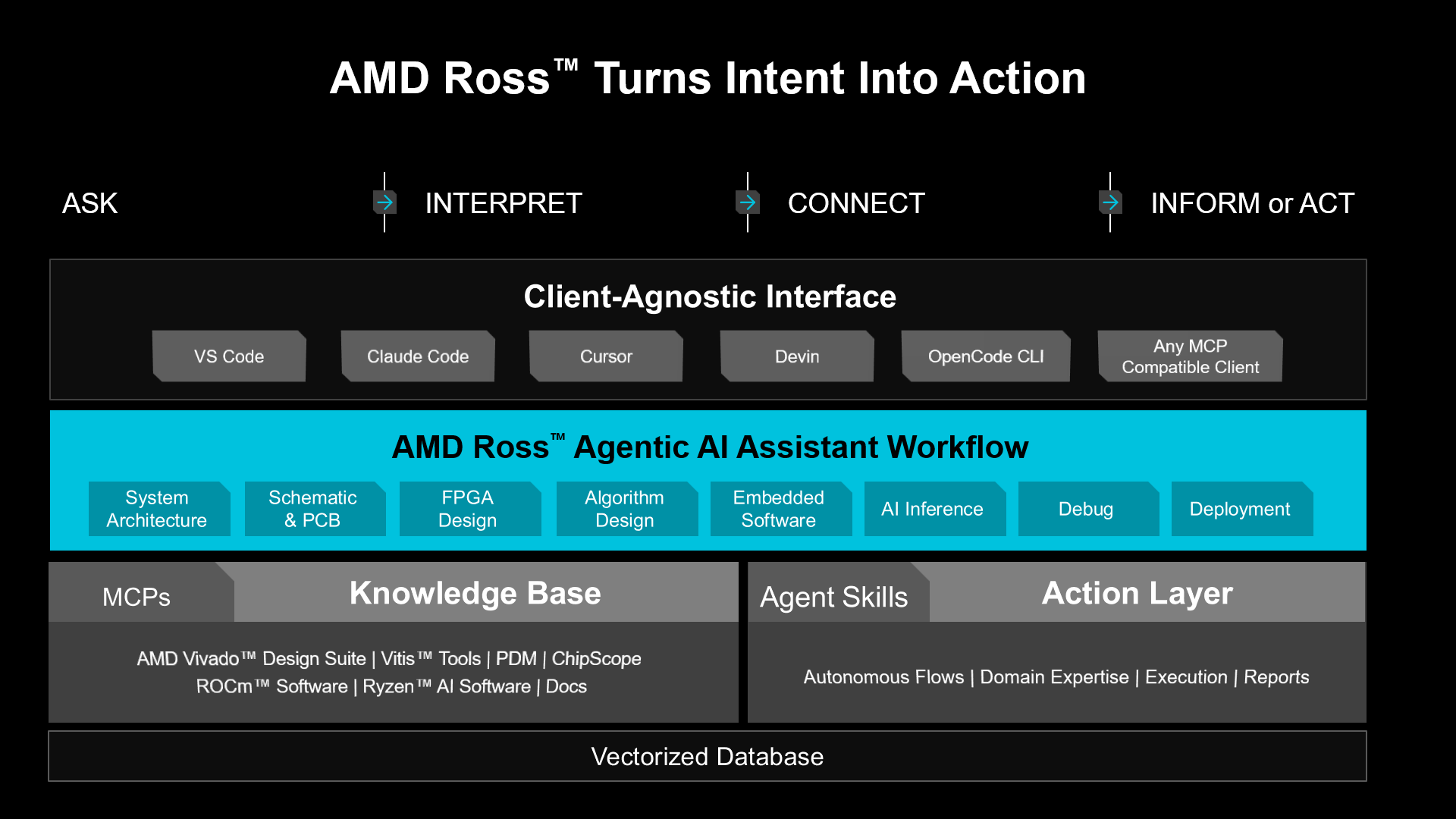
AMD Ross foundational stack and agentic workflows.출처: AMD 공식 뉴스룸 발표 · AMD
왜 중요한가? AMD 임베디드 제품은 FPGA, 적응형 SoC, x86 임베디드 프로세서, 특화된 엣지 AI 플랫폼으로 구성되며, 풍부한 개발 도구와 작업 흐름 생태계가 이를 지원한다. 설계가 갈수록 정교해지는 가운데 엔지니어는 시스템 개발 수명 주기 전반에 이러한 자원과 검증된 엔지니어링 관행을 적용하는 방식을 간소화할 수 있다. 전문가의 방법론을 재사용 가능한 에이전트 스킬로 축적하면 조직은 전문 지식에 더 쉽게 접근하고 일관된 실행을 가능하게 하며, 엔지니어가 더 높은 가치를 지닌 설계 과제에 집중하도록 할 수 있다.
AMD Ross는 개발자를 어떻게 돕나?
하드웨어 설계와 디버깅, 소프트웨어 개발과 배포, AI 추론, 시스템 수준 설계에 걸쳐 작업하는 팀이 늘면서 임베디드 개발은 점점 복잡해지고 있다. AMD Ross는 고객이 매일 사용하는 기술과 방법론을 기반으로 AMD 임베디드 도구, 신뢰할 수 있는 지식, 전문가가 작성한 작업 흐름을 하나의 에이전틱 AI 경험으로 통합한다. AMD Ross는 에이전틱 AI의 역량을 임베디드 개발자에게 제공해 전체 수명 주기를 가속하고, 제품 혁신을 설계 의도에서 배포까지 더 빠르게 진행할 수 있게 한다.
— 살릴 라제, AMD 임베디드 부문 수석 부사장 겸 총괄 관리자. AMD Ross는 무엇을 지원하나? AMD Ross는 하드웨어 설계와 디버깅부터 소프트웨어 및 알고리즘 개발, 엣지 AI 구현과 배포까지 임베디드 개발 여정을 지원한다. 개발자는 자연어를 사용해 AI 에이전트에 문서 검색, 도구 상태 확인, 명령 실행, 디버깅 안내, 검증된 작업 흐름 실행을 요청할 수 있다.[1] AMD Ross는 AMD 임베디드 도구 포트폴리오 전반에서 작동하며 다음 작업을 지원한다.
하드웨어와 소프트웨어의 기능 분할을 수행한다.
고수준 합성(HLS) 도구 기반 하드웨어 설계를 구현한다.
실리콘 설계를 최적화하고 디버깅한다.
임베디드 소프트웨어 애플리케이션과 알고리즘을 개발한다.
AMD 임베디드 AI 소프트웨어를 사용해 머신러닝 알고리즘을 최적화한다.
전력을 정확하게 추정하고 소비 전력을 줄이도록 최적화한다.
시스템 회로도를 검토하고 최적의 보드 배치를 수행한다.
AMD Ross는 특정 클라이언트에 종속되지 않는다. 따라서 팀은 원하는 대규모 언어 모델(LLM), 통합 개발 환경(IDE), 명령줄 환경을 유연하게 사용할 수 있으며, AMD 임베디드 개발 도구와의 연결도 유지할 수 있다.
AMD Ross의 차별점은? 일반 AI 보조 도구와 달리 AMD Ross는 AMD 임베디드 개발 환경, AMD의 축적된 엔지니어링 지식, 전문가가 작성한 방법론을 중심으로 구축됐다. 개발 도구 위에 얹은 단순한 AI 코딩 보조 도구가 아니라, AMD 개발 환경에 대한 직접 접근, AMD 문서, AMD가 작성한 작업 흐름, 재사용 가능한 엔지니어링 전문 지식을 결합한 임베디드 개발 전용 경험이다. AMD Ross는 일반적인 코파일럿으로는 제공하기 어려운 맥락에 맞는 안내와 작업 흐름 자동화를 제공하며, 원하는 LLM·IDE·명령줄 환경을 모두 지원해 유연성을 유지한다. AMD Ross는 다음 네 가지 전용 구성 요소를 결합해 이를 구현한다.
모델 컨텍스트 프로토콜(MCP) 서버: 개방형 표준을 기반으로 하는 MCP 서버를 통해 AMD Ross는 AI 에이전트를 AMD 임베디드 도구에 연결한다. 이 연결로 AMD Ross는 정보를 조회하고 명령을 실행하며 설계 환경 안에서 작업할 수 있다.
AMD 지식 기반: AMD가 검증한 벡터 데이터베이스에는 사용자 안내서, 제품 안내서, 백서, 애플리케이션 노트 및 답변 기록이 포함된다. 이를 통해 클라우드 또는 로컬에서 이용 가능한 오프라인 환경에서 AMD가 검증한 답변과 문서에 접근할 수 있다.
에이전트 스킬: 전문가가 작성한 개방형 마크다운 파일로, 흔히 수행하는 설계 작업의 반복 가능하고 공유 가능한 모범 사례를 담는다. 이 스킬은 타이밍 최적화나 Vitis HLS에서 더 높은 성능을 내도록 C++ 설계를 재구성하는 등 구조화된 작업 흐름을 LLM이 따르도록 안내할 수 있다.
설계 예제: 바로 실행할 수 있는 설계를 통해 실제 임베디드 응용 분야에서 에이전트 스킬을 어떻게 적용하는지 보여준다.
AMD Ross의 기반 스택과 에이전틱 작업 흐름. AMD Ross는 어떤 일을 할 수 있나? AMD Ross는 설계 의도에서 배포에 이르는 개발팀의 여정을 가속하도록 설계됐으며, 다음을 포함한다.
AI 지원 작업 흐름 자동화를 통한 시제품 제작 시간 단축.
AMD 검증 지침과 재사용 가능한 방법론을 통한 디버깅 및 최적화 주기 단축.
반복적인 도구 조작과 작업 자동화를 통한 개발자 생산성 향상.
검증된 전문가 작업 흐름에 접근해 신입 엔지니어의 적응 가속.
팀과 프로젝트 전반에서 모범 사례를 일관되게 실행.
조직이 축적한 엔지니어링 지식의 재사용성과 확장성 향상.
iWave Global FPGA SOM 사업부 부문 부책임자인 게타 고빈다라지 씨는 “AMD Ross 에이전틱 AI 보조 도구는 우리 개발 작업 흐름에 유용하게 추가됐다. 문제를 더 효율적으로 찾아내고 해결하는 데 도움을 주며, 디버깅과 초기 구동 단계에 필요한 시간과 노력을 줄여준다”고 말했다.
AMD Ross를 활용한 작업 흐름의 예는 다음과 같다.
자연어로 표현한 의도를 문서 검색, 도구 명령 실행, 코드 생성, 설계 반복, 설계 목표 달성을 위한 개발자 안내 등 개발 작업으로 전환한다.
도구 오류를 이해하기 쉬운 설명, 맥락에 맞는 안내, 수정 권고를 통해 파악하고 해결한다.
AMD 타이밍 방법론을 활용해 타이밍 문제를 분석하고 위반 항목을 찾아 원인을 설명하며 구현 개선 방안을 제안한다.
파이프라이닝, 루프 최적화, 프라그마 삽입, 아키텍처 개선 권고를 통해 Vitis HLS 설계를 최적화한다.
신호 캡처, 디버그 코어 구성, 인터페이스 분석, 근본 원인 파악을 안내해 하드웨어 디버깅을 가속한다.
AMD Ross는 언제 이용할 수 있나? AMD Ross는 에이전틱 AI, AMD의 전문 지식, 검증된 작업 흐름을 결합해 팀이 하드웨어·소프트웨어·AI·시스템 설계 전반에서 더 효율적으로 작업하도록 돕는 임베디드 개발의 새로운 접근 방식이다. 엔지니어링 지식을 쉽게 찾아 재사용할 수 있게 해 조직의 개발을 가속하고 전문성을 확장하며 혁신적인 제품을 더 빨리 시장에 출시하도록 지원한다.
AMD Ross는 현재 이용할 수 있다. 개발자는 AMD.com/Ross에서 에이전틱 AI 여정을 시작할 수 있다. AMD는 AMD Ross에서 추가 AMD 임베디드 도구와 작업 흐름 기능을 매월 순차적으로 선보일 예정이다.
이용 약관/저작권
AMD Ross는 설정된 사용자 권한과 지원되는 도구 환경 안에서 작동한다. 생성된 결과, 권고 및 제안된 조치를 신뢰하거나 실행하기 전에 검토할 책임은 사용자에게 있다. 고객은 해당 모델, 도구 및 배포 설정에서 사용이 허가되지 않은 경우 기밀 정보, 개인정보 또는 규제 대상 데이터를 제출해서는 안 된다.
영어 원문
AMD Brings the Power of Agentic AI to Embedded Design and Development Cycle
What’s the News? AMD today introduced AMD Ross™, an agentic AI assistant designed to accelerate the complete embedded development flow – from architecting the design to optimization, debugging, PCB design, schematic review, software, AI and deployment of the actual system. AMD Ross enables natural-language tool interaction and the deployment of expert-developed agent skills, reusable workflows and a grounded AMD Knowledge Base that guide the entire design process. It connects to tools, scales expertise, automates proven repeatable workflows and analyzes results,1 helping engineers quickly move from design intent to implementation and dramatically accelerating typical embedded development cycles.
Why It Matters? AMD Embedded products span FPGAs, adaptive SoCs, x86 embedded processors and specialized edge AI platforms, all supported by a rich ecosystem of development tools and workflows. As designs become increasingly sophisticated, engineers have an opportunity to streamline how they apply these resources and proven engineering practices across the entire system development life cycle. By capturing expert methodologies as reusable agent skills, organizations can make specialized knowledge more accessible, enable more consistent execution and free engineers to focus on higher-value design challenges.
How Does AMD Ross Help Developers?
Embedded development is becoming increasingly complex as teams work across hardware design and debug, software development and deployment, AI inference, and system-level design. AMD Ross brings AMD Embedded tools, trusted knowledge and expert-authored workflows together in a single agentic AI experience grounded in the technologies and methodologies our customers use every day. AMD Ross brings the power of agentic AI to embedded developers to move product innovations from design intent to deployment faster by accelerating the entire life cycle.
— Salil Raje, senior vice president and general manager, AMD EmbeddedWhat Does AMD Ross Support? AMD Ross supports the embedded development journey, from hardware design and debug to software and algorithm development, edge AI implementation and deployment. Using natural language, developers can ask AI agents to search documentation, check tool status, run commands, guide debugging and execute proven workflows.1 AMD Ross works across the entire AMD Embedded portfolio of tools to enable users to:
Perform hardware and software partitioning.
Implement high-level synthesis tool-based hardware designs.
Optimize silicon design and debug.
Develop embedded software applications and algorithms.
Optimize machine learning algorithms by using AMD embedded AI software.
Accurately estimate power and optimize for lower power.
Perform system schematic review and optimal board layout.
AMD Ross is client-agnostic, giving teams flexibility to use their preferred large language models (LLMs), integrated development environments (IDEs) and command-line environments while remaining connected to AMD Embedded development tools.
What Makes AMD Ross Unique? Unlike generic AI assistants, AMD Ross is built around AMD Embedded development environments, institutional AMD engineering knowledge and expert-authored methodologies. It’s not merely an AI coding assistant layered on top of development tools; it combines direct access to AMD development environments, AMD documentation, AMD-authored workflows and reusable engineering expertise into a purpose-built embedded development experience. AMD Ross delivers contextual guidance and workflow automation that generic copilots cannot provide, while remaining flexible through open support for all preferred LLMs, IDEs and command-line environments. AMD Ross does this by bringing together four purpose-built components:
Model context protocol (MCP) servers: Based on open-standard MCP servers, AMD Ross connects AI agents to AMD Embedded tools. This connection enables AMD Ross to query information, run commands and work within the design environment.
AMD Knowledge Base: AMD-validated vectorized databases contain user guides, product guides, white papers, application notes and answer records. They provide AMD validated answers and documentation access through the cloud or in an offline environment available locally.
Agent skills: Open, expert-authored markdown files capture repeatable, shareable best practices for common design tasks. These skills can guide an LLM through structured workflows such as timing optimization or restructuring of a C++ design for higher performance in Vitis HLS.
Design examples: Ready-to-run designs demonstrate how agent skills can be applied to real-world embedded applications.
AMD Ross foundational stack and agentic workflows.What Can AMD Ross Accomplish? AMD Ross is designed to accelerate a development team’s journey from design intent to deployment, including:
Faster time-to-prototype through AI-assisted workflow automation.
Shorter debug and optimization cycles through AMD-validated guidance and reusable methodologies.
Higher developer productivity by automating repetitive tool interactions and tasks.
Accelerated onboarding of new engineers through access to proven expert workflows.
Consistent execution of best practices across teams and projects.
Greater reuse and scalability of institutional engineering knowledge.
“The AMD Ross agentic AI assistant has been a valuable addition to our development workflow. It helps us identify and troubleshoot issues more efficiently, reducing the time and effort required during the debugging and bring-up stages,” said Ms. Geetha Govindaraj, associate director, FPGA SOM BU, iWave Global.
AMD Ross-enabled workflow examples include:
Transforming natural-language intent into development actions by searching documentation, executing tool commands, generating code, iterating designs and guiding developers toward design goals.
Understanding and resolving tool errors through simplified explanations, contextual guidance and corrective recommendations.
Analyzing timing issues using AMD timing methodologies to identify violations, explain root causes and suggest implementation improvements.
Optimizing Vitis HLS designs through recommendations for pipelining, loop optimization, pragma insertion and architecture refinement.
Accelerating hardware debug through guided signal capture, debug-core configuration, interface analysis and root-cause identification.
When will AMD Ross be Available? AMD Ross represents a new approach to embedded development, combining agentic AI, AMD expertise and proven workflows to help teams work more efficiently across hardware, software, AI and system design. By making engineering know-how easy to access and reuse, AMD Ross helps organizations accelerate development, scale expertise and bring innovative products to market faster.
AMD Ross is available now. Developers can start their agentic AI journey at AMD.com/Ross. AMD plans to roll out additional AMD Embedded tools and workflow capabilities under AMD Ross on a monthly cadence.
Terms of Use/Copyright
AMD Ross operates within configured user permissions and supported tool environments. Users remain responsible for reviewing generated outputs, recommendations, and proposed actions before relying on or implementing them. Customers should not submit confidential, personal or regulated data unless authorized for use with the applicable model, tool and deployment configuration.